Construction of community
facilities and cultural exchange with the local people of Singburi
Singburi
June 2 - June 16, 2013
Singburi
June 30 - July 13, 2013
Singburi
July 21 - August 4, 2013
Singburi
August 4 - August 18, 2013
Singburi
September 29 - October 13, 2013
Singburi
January 26 - February 9, 2014
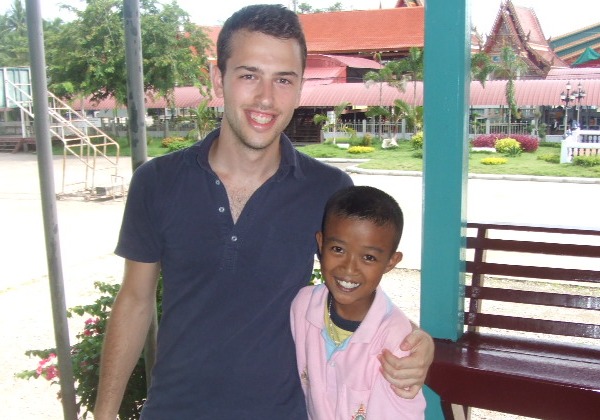
Volunteer project: The Singburi projects are part of a larger campaign and efforts to stimulate rural development with the support of International Voluntary Service. We believe that the impact of the international volunteers in rural communities is an important stimulus to open minds and reduce prejudices. We work a lot with rural areas to transmit these values to the villagers.
The main objective of the project is cultural exchange between the international volunteers and the local villagers, but the participants will also get involved in practical work in the communities, doing different kinds of support and development works, like construction or renovation of village houses or schools, etc. The exact nature of the work will depend of the needs of the village at the time of the project.

The aim of this project is to not only contribute to the rural development of the village, rather, it is hoped that through this work, both the participants and the villagers come closer, have fun (sanuk) together, learn more about each other's cultures and set a good basis for future activities and give both the participants and the local people an opportunity to exchange their cultures.
Study theme: The volunteers will learn about the culture of rural Thailand in general and the traditions and specificity of the Central region. Thai language lessons will also be given to the volunteers.
Language: English
Leisure time: The free time will be organised by the volunteers with the support of the group leader. The closest city is far but accessible. The region isn’t very tourist attractive as such but the nature is of extraordinary beauty: rice fields, temples and natural parks are all over the region.
Accommodation: Authentic Thai homestay in the communities. Sleeping bag is required.
Location: The project will be held in the Singburi region (Central Thailand). Sing Buri is 142 km north of Bangkok on the west bank of the Chao Phraya River. It was established in the year 1895 during the reign of King Rama V through a consolidation of three small riverside towns including Sing Buri, In Buri, and Phrom Buri. The province currently occupies an area of 822 square kilometres. Singburi has many beautiful temples: Wat Phra Non Chakkrasi Worawihan is a royal temple in the third class. Inside the Wihan (image hall), a large reclining Buddha image is enshrined. Furthermore, there are two other Buddha images: Phra Kan and Phra Kaeo. They were built in the reign of King Rama V to be the principal image at a ceremony for civil servants to swear an oath of allegiance to the king.
Terminal: National airport: Bangkok. Singburi bus station (2-3 hours from Mochid bus station).
Age range: 18 and over

Teaching English to students in Songkhla Province
Songkhla
June 9 - June 22, 2013
Songkhla
July 14 - July 28, 2013
Songkhla
August 11 - September 1, 2013
Songkhla
October 13 - October 27, 2013
Songkhla
March 2 - March 16, 2014
Volunteer project: Songkhla is one
of the southern provinces of Thailand. The name derives from its
original Malay name Singgora (city of lions). This refers to a
lion-shaped mountain near the city of Songkhla. In contrast to most
other provinces, the capital Songkhla is not the largest city in the
province. The much newer city of Hat Yai, with a population of 194,000,
is twice as big as Songkhla. This often leads to the misconception that
Hat Yai is the provincial capital. Both cities are part of Greater
Hatyai-Songkhla Metropolitan Area.
Groups of international volunteers
have contributed to the activities of several schools in the Khlong Hoi
Khong district
since 1998, particularly in holding lessons and activities in English
for the children. The volunteer projects this year are the continuity of these efforts.

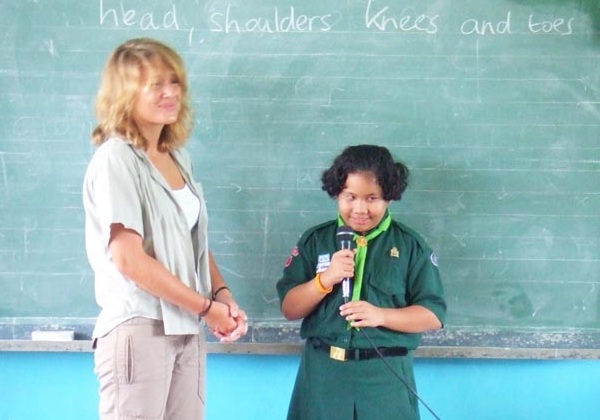
The main task during this volunteer project will be teaching English to primary and secondary school students in Klong Hoi Klong district. While the Thai education system is very formal and follows strict regulations, the volunteers should be ready to adopt a non-formal approach and to plan non-formal education activities (teaching through songs, games, open air activities, etc). Volunteers can also organize environmental education workshops in English, so that the children will learn English and also increase their knowledge about their surrounding environment. The personal interaction, broadening of the children’s minds and the cultural exchange between both parties is considered even more important than the actual classes.
Leisure time: The free time will be organized by the volunteers with the support of the group leader. Hat Yai is 40 minutes by public transportation from the project base, while Songkhla and Samila beach can be reached in about one hour and thirty minutes.
Study theme: The volunteers will be introduced to non-formal education techniques, intercultural learning and group dynamics.
Language: English
Accommodation: Dormitory-style accommodation. Conditions are simple but will serve your needs. The food will be vegetarian. Sleeping bag is required.
Location: The project is based approximately 20 km from the city of Had Yai. Volunteers will work in the nearby schools. The project base is a beautiful garden complex, located in rural southern Thailand, surrounded by rubber tree plantations.
Terminal: Hat Yai Train Station; Hat Yai Airport; Bangkok International Airport.
Age range: 18 and over
Extra fee: 100 Euro
The extra fee is intended to support the hosting organization who does not have sufficient funds. It is due upon arrival on the project.

Preserving the culture of the hill
tribes in Northern Thailand
Chiang Rai
June 16 - June 30, 2013
Chiang Rai
July 7 - July 21, 2013
Chiang Rai
September 8 - September 22, 2013
Chiang Rai
November 24 - December 8, 2013
Volunteer project: The Akha tribe is the fourth largest hill-tribe group in Thailand. Originally from the highlands of the Yunan Province in China, there are now Akha in Thailand, Laos, China and Burma. The population of the Akha in these five countries may range as high as 400,000 or higher. Genealogical charts show 70 generations of Akha, putting the start of their civilization at least 1500 years ago. There are about 63,000 Akha in Northern Thailand scattered over some 278 villages, over 80% of whom live in the Chiang Rai Province. Most Akha are farmers, cultivating dry rice and vegetables, breeding pigs, gathering food from the jungle and occasionally hunting or fishing. The villages are located in remote areas at high elevations. Over the centuries, the Akha have developed unique ceremonies, culture and religion. Up until the last 30 years, there was little contact with outsiders. Due to rapid social and economic changes in this region, most dramatically brought about by western style capitalism, the lifestyle and very lives of these people are being destroyed. They now are having great difficulty holding onto the land on which they live, they are increasingly being pushed into deeper poverty for the majority and they are facing increased problems of drug use, prostitution and imprisonment. Although modernization and missionaries have caused change in some Akha villages, many Akha still maintain much of their culture and traditions.

The main aims of the project are to promote the distinct Akha culture between international volunteers and to establish a real intercultural encounter between the volunteers and the local people. Through common activities and free time, the volunteers will have the possibility to learn more about the situation of the hill tribes and the Akha in particular.
The main objective of the project is cultural exchange between the volunteers and the local villagers but the participants of the project will also practically work in the communities doing several kinds of support and development works, like renovation of some community spaces or field work and farming with the villagers. The exact nature of the work will depend of the needs of the village at the moment of the project.
Participating in the Hill tribe volunteer project in Northern Thailand gives you the opportunity to meet local rural communities while also giving you the chance to really understand the culture and traditions of this fascinating part of Thailand. The work is very diverse, from construction to teaching and working with the villagers. Volunteers are expected to be flexible about the nature of the work as it can vary according to the need of the community. The essence of this project is to spend time with the Hill tribes and learn about their culture.
Study theme: The volunteers will learn about Akha culture, lifestyle, particularities and problematic situation in Thailand from the inside and from Akha people themselves. An introduction to Akha and Thai language is foreseen.
Language: English
Leisure time: The free time will be mostly spent in the community. The volunteers will have the chance to learn about Akha cuisine, massage and specific handicrafts. They might have the opportunity to attend traditional Akha ceremonies and events. If the weather permits it, trekking in the hills can also be foreseen.
Accommodation: The volunteers will be hosted by the villagers in the communities where they will work. The conditions will be the simple, but very authentic. Sleeping bag is required.
Location: The project will be held
in the Chiang Rai province (North-west Thailand) close to the
surrounding mountains in the direction of the Golden Triangle, maybe one
of the most beautiful locations in Thailand! The influence of the hill
tribes and nearby Burma, Laos and China shapes the culture. The
activities will take place in the Akha villages around the region.
The Mae Chan district area is about 20 Km north of Chiang Rai city, in
the North region, Northern of Thailand.
Terminal: Bus and national plane: Chiang Rai
Age range: 18 and over
Extra fee: 200 Euro
The extra fee is intended to support the hosting organization who does not have sufficient funds. It is due upon arrival on the project.

Cadip volunteer project review:
"First of all
it was an incredible experience and I highly recommend it to anyone
looking to do something meaningful and enjoyable. The Akha people are
very intriguing and very kind. We spent our time in two different
villages where we were treated with great respect and cared for as
honorary guests. Nevertheless the conditions were very simple, and I
would not recommend this workcamp to anyone requiring "western" standard
facilities or food. We ate many traditional Akha dishes which consisted
of various vegetables and meats (both cooked and uncooked for the
daring). We were lucky to take part in a festival that was occurring at
one of the villages called the "swing festival". To prepare for this we
helped the villagers collect trees from the jungle and then build a
giant swing that we could all use, it was a lot of fun. Other projects
we worked on included building a house and clearing a long road of
foliage. The mountains surrounding Chiang Rai are beautiful, and our
camp leader was very catering to all of our touristic needs (sightseeing
and what not). The greatest aspect of the camp was living among the Akha
people, sleeping and eating in their homes, and taking part in their
customs and traditions."
Anthony P.,
Cadip volunteer 2006
Teaching English and cultural exchange in rural communities in Ubon
Ratchatani
Ubon Ratchatani
June 23 - July 7, 2013
Ubon Ratchatani
July 28 - August 11, 2013
Ubon Ratchatani
August 25 - September 8, 2013
Ubon Ratchatani
September 22 - October 6, 2013
Ubon Ratchatani
December 8 - December 22, 2013
Ubon Ratchatani
February 2 - February 16, 2014
Volunteer project: Ubon Ratchatani is one of the biggest provinces of the North East region of Thailand. The North East is known between Thais as Isan. The region faces major environmental, economic and social problems. Due to the high percentage of sand present in the soil and the shortage of water, agriculture is limited to some traditional crops and does not reach the same results as in other Thai regions (main crops are rice, peanuts and vegetables). The economic problems caused by the environmental situation cause massive emigration of young adults toward Bangkok and other big cities. Often the young adults leaving for big cities leave their children with the grand parents, and while the grand parents take care of the animals and the fields, the children hang around in the villages and try to have fun. Not always the local institutions have a strategy to involve children in outdoor or leisure activities. The Khueang Nai District administration wants to dynamize the Deng Mor rural area and stimulate English learning with the help of the international volunteers.
In this project, volunteers will take part in some manual work for the local community and will teach English to children at primary or secondary schools. This work will bring both the participants and the villagers closer and will provide opportunities for cultural exchange.
The volunteers will discover the typical Isan culture and traditions, visiting villagers, farmers and local artisans, and helping them in their daily tasks. The volunteers will also hold English language classes and workshops for the children of the local primary and secondary school.
Study theme: The volunteers will learn about the culture of rural Thailand in general and the traditions and specificity of the Isan region. Thai language lessons will also be given to the volunteers.
Language: English
Leisure time: Leisure time will be organised by the volunteers with the support of the group leader. The closest city is far but accessible. The region isn’t very tourist attractive as such but the nature is of extraordinary beauty: rice fields, small temples and natural parks are all over the region.
Accommodation: The volunteers will be hosted in a traditional Isan house in the community and have access to the same basic conditions as any villager. Sleeping bag is required.
Location: The Deng Mor sub-district area is about 20 km far from Khueang Nai city and 60 km north west of Ubon Ratchatani city, in the Isan region, North east of Thailand.
Terminal: Bus, train and national airport: Ubon Ratchatani
Age range: 18 and over
Extra fee: 100 Euro
The extra fee is intended to support the hosting organization who does not have sufficient funds. It is due upon arrival on the project.
Nature
conservation and raising environmental awareness in Kao Yai National
Park
Nakhon Ratchasima
June 30 - July 13, 2013
Nakhon Ratchasima
July 28 - August 11, 2013
Nakhon Ratchasima
August 4 - August 18, 2013
Nakhon Ratchasima
August 18 - September 8, 2013
Nakhon Ratchasima
November 10 - November 24, 2013
Nakhon Ratchasima
February 16 - March 2, 2014
Volunteer project: Khao Yai National Park is a mountainous area, reaching its highest point at the summit of Khao Rom 1,351m above sea level. The area has vastly grassy fields alternating with productive forest. The north and the east part are smoothly sloping down, while the south and the west part are rising up. The area is the source of five main rivers. Khao Yai has three main seasons, with an annual mean temperature of 23°C, though this varies greatly with the seasons. Tropical moist evergreen forest covers the central area of Khao Yai National Park. There is a rich diversity of plants (about 2,000 species). Towering trees draped in mosses, climbers and epiphytes, tangled trunks of the strangling figs, drooping lianas and spiny rattan palms, delicate ferns, multicolored lichens and an ever-changing array of fungi. There is always something new to discover in the forest. The park has a diverse plant community. Over 320 species of birds have been recorded. To the non-expert, birds are often just mysterious whistles, trills and calls, or a flutter of wings and a glimpse of color. Patience is needed and good binoculars.
Our Conservation Program works within the nearby national forest park and its forest rangers; this will give you the opportunity to help conserve this beautiful location whilst enjoying nature. This is the perfect program for someone with a keen interest in nature and outdoor activities, and who enjoys a challenge. Most of all, enjoy yourselves and make life lasting friends through an experience you will never forget. Volunteers will work for the present and the future of ecological preservation, and elevate the protection of species and eco-systems within the national park.
The main task of the volunteer group is to engage in
practical work in the local communities doing different kinds of support
and development work. Possible activities are: teaching the children at
local schools about the forest and the effects of poaching; work with
the rangers in the park; planting trees, possibly together with the
local population; making trails for eco-tourism in the park. The exact
nature of the work will depend of the needs of the park in the different
seasons. The participants will also take part in cultural exchange
activities with the locals. Teaching English at a primary school is also
a possible project activity.
Please, remember that the work is primarily a tool for building
relationships with one another. So take time to socialize and let
friendships develop.
Study theme: The volunteers will learn about the culture of rural Thailand in general and the traditions and specificity of the region. Thai language lessons will also be given to the volunteers.
Language: English
Accommodation: Your accommodation
will be in a forest resort in Nakhon Ratchasima province. This camp
is situated about 30 km from the city of Nakhon Ratchasima and about 15
km from Wang Nam Keow, the nearest town. It takes about 30 minutes from
the resort to go to Wang Nam Keow, where you will find all the amenities
you may need i.e. internet, shops, hospital, pharmacy, banks and
restaurants.
You will stay in the resort, either in private rooms or eco cottages.
Sleeping bag is required. All rooms have private bathrooms. The house
has a communal area where you can eat, relax and meet. The house is
within walking distance of a local shop and a make shift bar provided by
the friendly locals.
Location: Nakhon Ratchasima,
generally known as "Khorat", is Thailand's largest province situated on
sprawling northeast plateau. Located approximately 260 kilometers
northeast of Bangkok, the city itself serves as the gateway to the lower
northeastern region. Khorat has fascinating traditions, charming
hospitality, splendid natural scenery and awesome historical sites.
Wang Nam Keow is a district (amphoe) in the southern part of Nakhon
Ratchasima Province, Northeastern Thailand. Wang Nam Keow is about 3
hours by bus from Bangkok.
Terminal: Wang Nam Keow Bus Station; Bangkok International Airport.
Age range: 18 and over
Extra fee: 100 Euro
The extra fee is intended to support the hosting organization who does not have sufficient funds. It is due upon arrival on the project.

Environmental conservation activities in the Isan Region of Northeastern
Thailand
Roi-Et
July 14 - July 28, 2013
Roi-Et
August 18 - September 1, 2013
Roi-Et
October 27 - November 10, 2013
Roi-Et
March 16 - April 30, 2014
Volunteer project: Roi-Et is one of
the provinces in the North East of Thailand, known between Thais as
Isan. The Isan is also one of the regions of Thailand where traditions
are preserved and respected. The Isan culture is influenced by Laos and
Lao culture. This influence is represented in their special cooking,
handicrafts, music and dance and in the typical Muay Thai Boxing.
The Bo Pan Khan site dates back to the bronze era, when it was a main
economic centre of the region due to the rock salt that could be found
in the soil. Nowadays, the site is virtually abandoned despite efforts
of the Thai government in the 90's to attract local tourists. Bo Pan
Khan is surrounded by water, which is now filled with riverweed.

In this project, the volunteers will be involved in
the environmental conservation of the Bo Pan Khan area, will help
promote organic farming and will help raise awareness among the
community about recycling. The specific projects are:
- The volunteers will work at Bo Pan Khan to help cutting the riverweed.
Then they will turn the riverweed into fertilizer. Other activities are:
cleaning around the area and planting trees or flowers in the garden.
This project is running during summer, from November to May, and
planting trees or flowers would be better done during raining reason.
- The volunteers will work at the temple to help with organic farming
work, such as planting cucumbers, tomatoes, long beans, morning glory,
etc. They'll be using fertilizer that was made from riverweed. They will
also help to water the plants after planting. This project is running
during raining season, from June to October.
- The volunteers will work in the village on a recycling bank project.
At first, the group will help build the recycling bank where they can
separate garbage and may help to repair the incinerator. Then the group
will campaign about separating the garbage. They will also help
recycling garbage by being creative, e.g. making a fish from plastic
bottle or paper, making a small flower from a straw, making an apron
from a milk box. The volunteers may also help making recycle bins.
Study theme: The volunteers will learn about the culture of rural Thailand in general and the traditions and specificity of the Isan region. Thai language lessons will also be given to the volunteers.
Language: English
Leisure time: Leisure time will be organised by the volunteers with the support of the group leader. The closest city is far but accessible. The region isn’t very tourist attractive as such but the nature is of extraordinary beauty: rice fields, small temples and natural parks are all over the region.
Accommodation: The volunteers will be hosted in a traditional Isan house in the community and have access to the same basic conditions as any villager. Sleeping bag is required.
Location: The Denrat sub-district area is about 8 km far from Nong Hi, 25 km far from Panomprai city and 95 km from Roi–Et city, in the Isan region, North east of Thailand.
Terminal: Roi Et Bus Station; Train and national airport: Ubon Ratchatani
Age range: 18 and over
Extra fee: 100 Euro
The extra fee is intended to support the hosting organization who does not have sufficient funds. It is due upon arrival on the project.
click here
for volunteer programs in other countries
![]()
FOR FULL, STARTED AND PAST PROJECTS, CLICK HERE
![]()